Not Sure Where the Water Is Coming From?
Most leak detection calls don't start with visible dripping. A homeowner notices a higher water bill, a damp patch on a basement wall, or a musty smell near a bathroom, with nothing obviously wrong. That is exactly what leak detection is for: locating a hidden leak behind a wall, under a slab, or along a buried supply line without opening up the whole area to find it.
In Chester's older rowhomes and twins, these calls usually trace back to original galvanized supply lines or a soldered joint that finally failed after decades of use. If your water meter keeps moving with every fixture in the house turned off, that is the clearest sign of a hidden leak somewhere between the meter and your plumbing. Widener University's campus sits in the middle of this same older housing stock, built in the same early-1900s wave.
How We Find a Hidden Leak
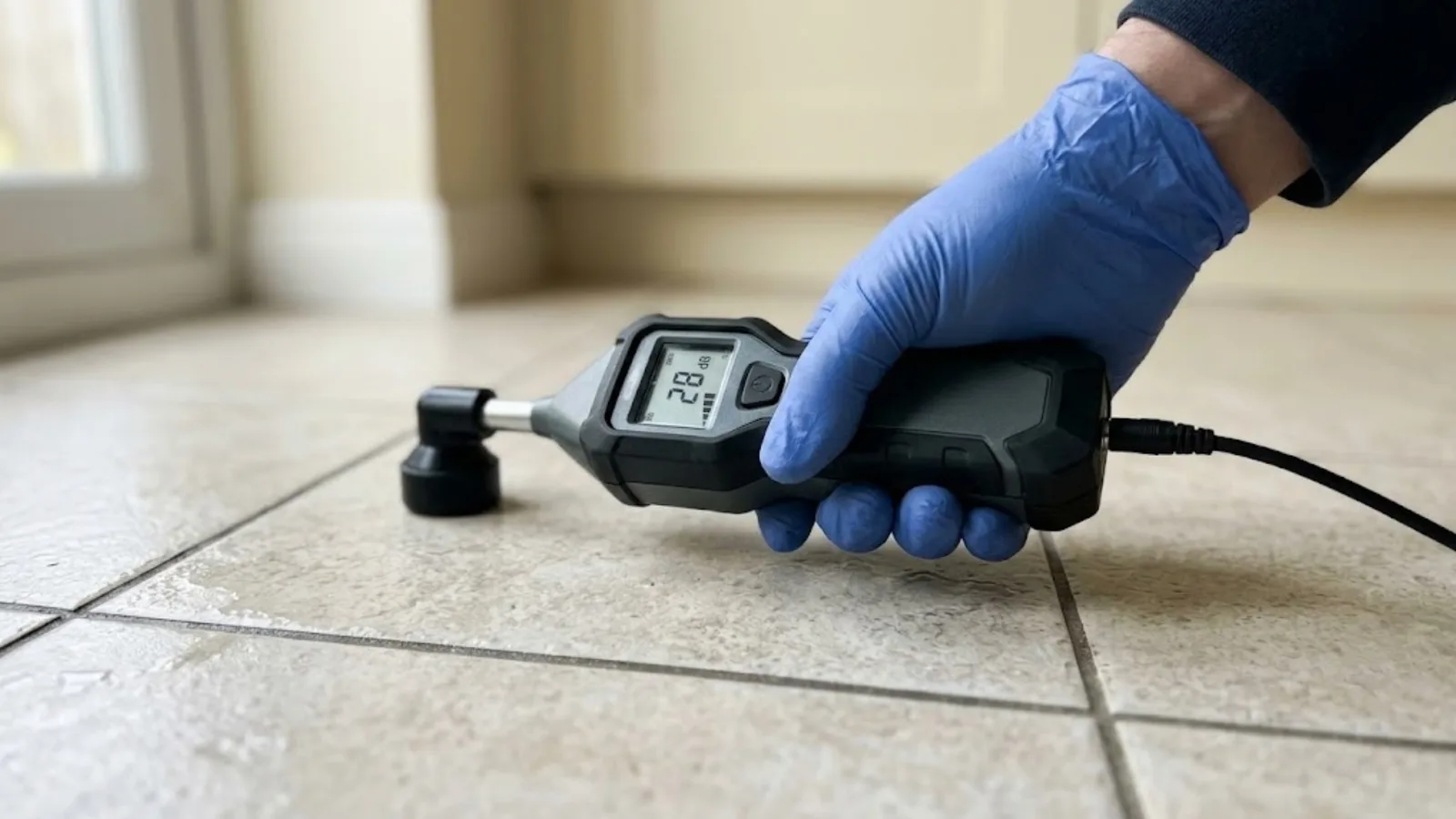
Chester Express Plumbing uses acoustic listening equipment and pressure testing to pinpoint a leak's location instead of guessing where to cut. This works on leaks under concrete slabs, inside finished walls, and along underground water service lines, the three most common hidden-leak locations in Chester's housing stock.
A technician isolates sections of the plumbing system and checks for pressure drop, narrowing the search to a specific wall section or a short run of pipe rather than an entire room. Most leaks are pinpointed in a single visit. If the source turns out to be the water heater itself rather than a supply line, our water heater repair team can usually handle it on the same trip.
Emergency Steps If You Suspect a Hidden Leak
- Your water bill has gone up noticeably with no change in household water use.
- The water meter still moves when every faucet, toilet, and appliance in the house is off.
- A warm spot on the floor over a slab foundation, not near a heating vent.
- A musty smell or discolored patch on a wall or ceiling with no visible dripping.
- Low water pressure at one fixture while pressure elsewhere in the house stays normal.
What Happens After the Leak Is Found
Spot Repair
Most pinpointed leaks get a targeted repair at the exact location, without cutting into unaffected wall or slab.
Section Replacement
A supply line with multiple failure points, especially original galvanized pipe, is often more cost-effective to replace in that section than to keep patching.
Whole-Home Repiping
Homes with galvanized pipe near the end of its service life sometimes make more sense to repipe fully rather than chase leaks one at a time.
Why a Small Leak Is Worth Finding Early
According to the EPA's WaterSense program, the average household leak wastes more than 9,300 gallons of water a year, and roughly one in ten homes has a leak large enough to waste 50 gallons or more per day. A hidden leak inside a wall or under a slab does the same quiet damage a running toilet does to a water bill, plus the added risk of mold growth and structural water damage the longer it goes undetected.
Chester's Older Housing Stock Drives This Call
A large share of Chester's rowhomes and twins date to the city's early-1900s industrial boom, with tighter basement and crawlspace access than newer construction. Original galvanized supply lines and cast iron drains from that era are past their expected service life in many of these homes, which is the practical reason leak detection is one of our most-called services here rather than a general claim.
What Leak Detection Costs in Chester
These ranges reflect typical Chester-area jobs and are not a quote. Your technician gives a flat price once the leak's location and the repair scope are confirmed. A leak tracing back to an aging sewer lateral instead of a supply line is priced and scoped differently, which is part of why pinpointing the source matters. Want your real number? Call (610) 672-7601.
When a Hidden Leak Becomes an Emergency
A hidden leak is an emergency when water is actively spreading, when it is reaching a ceiling, outlet, or finished basement, or when it keeps running after you have shut the fixtures off. Shut off the main water valve first, then call our 24/7 line. A technician will treat it as an emergency call rather than a scheduled appointment.
On arrival the technician confirms the leak with a pressure check, locates it with acoustic and electronic tracing, and gives you an upfront price before any wall or floor is opened. If the leak is slow and the damage is contained, we can schedule the repair for the next available slot instead.
Water Meter Spinning or a High Water Bill
A water meter that moves when every fixture is off is the clearest sign of a leak. Turn off all faucets and appliances, then watch the meter or its small leak indicator for a minute. If it moves, close your main shutoff valve and check again. A meter that still moves with the main closed points to a leak on the line before your shutoff, which is usually the buried service line.
A bill that jumps with no change in how many people use the water deserves the same check. Your water utility reads the meter and sets the bill, so ask them about your usage history, then call us to find where the water is going. We trace the leak instead of guessing, which keeps the repair small.
Irrigation, Outdoor, and Business Leaks
Not every leak is inside the walls. A lawn that stays soggy, a sprinkler zone that leaks after the timer stops, or a hose bib that drips inside the wall are common outdoor leak calls. The same tracing tools find these without digging up the whole yard.
Businesses call for the same reason, an unexplained jump in water use, and the same method applies across a larger building. Our commercial plumbing team handles building-wide leak tracing and works around your hours.
Frequently Asked Questions
Why does my water meter keep running when everything is turned off?
A moving meter with every fixture off is one of the strongest signs of a hidden leak somewhere between the meter and your home's plumbing. Chester Express Plumbing pinpoints the exact location with electronic leak detection instead of guessing at which wall or slab section to open.
Can you find a leak without cutting into my walls or floor?
Yes. Acoustic and pressure-based leak detection narrows the search to a specific section before any cutting happens, so only the actual leak location gets opened.
How much does leak detection cost in Chester, PA?
Diagnostic leak detection typically runs $150 to $350, with spot repairs from $300 to $900 depending on access and pipe material. A flat price is confirmed after the leak is located.
Do you offer 24/7 emergency leak detection?
Yes. If a leak is active and causing damage right now, call our 24/7 line and a technician will treat it as an emergency call rather than a scheduled appointment.
Is a hidden leak an emergency?
It is when water is actively spreading, reaching electrical or ceilings, or the meter will not stop running. Shut off the main valve and call (610) 672-7601 any hour. A slow leak with no active damage can usually wait for the next scheduled visit.
Can you find a leak in an irrigation line or outdoor spigot?
Yes. We trace sprinkler lines, outdoor spigots, and buried water lines using the same electronic and pressure methods, so the dig is limited to the exact spot.
Emergency Leak? Hear Water Running and Can't Find It?
Chester Express Plumbing runs a 24/7 leak detection line for active leaks anywhere in Chester, PA.
☎ Call (610) 672-7601